Lift-Bed Layouts
An electric lift bed rises to the ceiling by day and lowers by night — the same floor becomes a full lounge and a dedicated bed, with no nightly conversion.
 Mercedes
The 30-Second Answer
An elevator bed — also called a lift bed or power lift bed — is a platform bed on electric actuators. Press a button and it rises flush toward the ceiling, opening the space beneath it. Press it again and the bed lowers to sleeping height. Nothing folds, unclips, or gets rebuilt.
That one motion is why it has become the most-requested layout we build. In a van, floor space is the scarcest thing you own. A fixed bed claims its footprint around the clock. A convertible dinette gives the space back — but only after you tear the bed down every morning and build it every night. An elevator bed keeps both: the same square footage is a full sit-up lounge during the day and a dedicated, always-made sleeping area at night. You reclaim the room without the nightly ritual.
The living area underneath stays a real room — seating, a table, and standing space — because the bed lives overhead until you want it. When you do, it comes down in seconds.
How It Works
The bed platform hangs from electric linear actuators anchored to the van's structure. Raised, it tucks under the roof and clears the ceiling; the space below becomes head-height living area. Lowered, it settles onto its supports at sleeping height. The two states share the exact same floor — that is the whole idea.
Same floor, two states. Raised, the bed clears the ceiling and the lounge below keeps standing headroom. Lowered, it becomes a dedicated, already-made bed over the folded lounge. Proportions are illustrative.
Honest Tradeoffs
An elevator bed is the right answer for a lot of travelers, but it is not free. Here is what it costs, plainly — so you can decide with your eyes open.
The lift mechanism and its actuators occupy the space where a run of driver-side upper cabinets would otherwise go. That is the core exchange: you gain an open lounge and lose some of the overhead cabinetry a fixed-bed layout would carry. If maximum enclosed storage is your top priority, a fixed bed may suit you better.
Raised, the platform sits below the roofline, so the standing headroom in the lounge is the floor-to-bed-underside height — not the full interior height of the van. It is comfortable sit-up and move-around space, and on a high-roof chassis most people stand under it, but it is a real number worth checking against your own height before you commit to a layout.
Raising and lowering the bed depends on the van's electrical system and the actuators. Any powered mechanism is one more thing that can eventually need service, which is why we build in a manual-override backup so the bed can still be lowered if the power path ever fails. It is a dependable system, but it is a system — not a slab of plywood.
Builds We've Delivered
This is not a concept. Every build below is a real van we finished with a lift-bed layout — open one to see the full spec, gallery, and chassis.
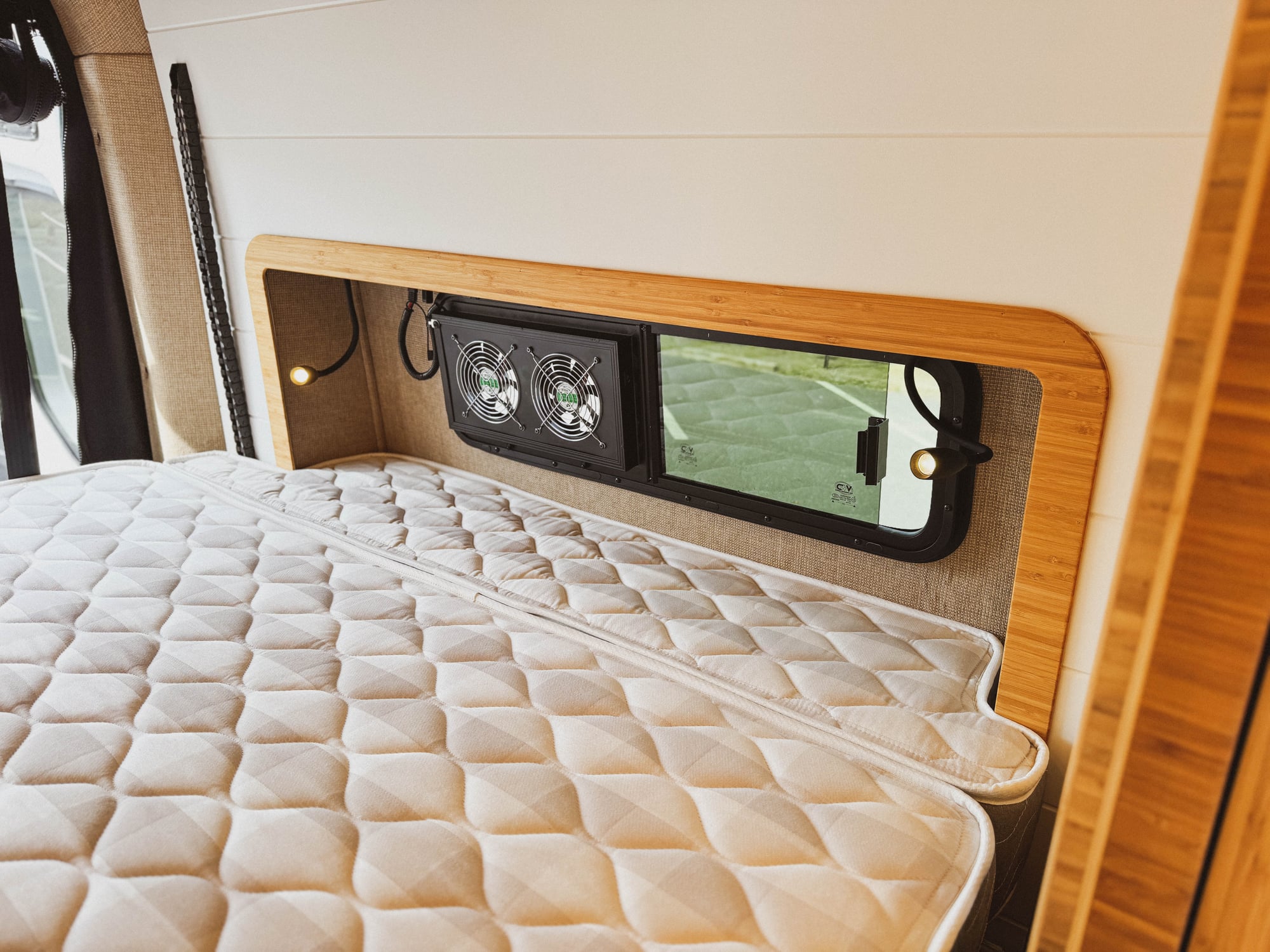
Our east-west lift bed over a convertible lounge — the compact, easy-to-park layout.
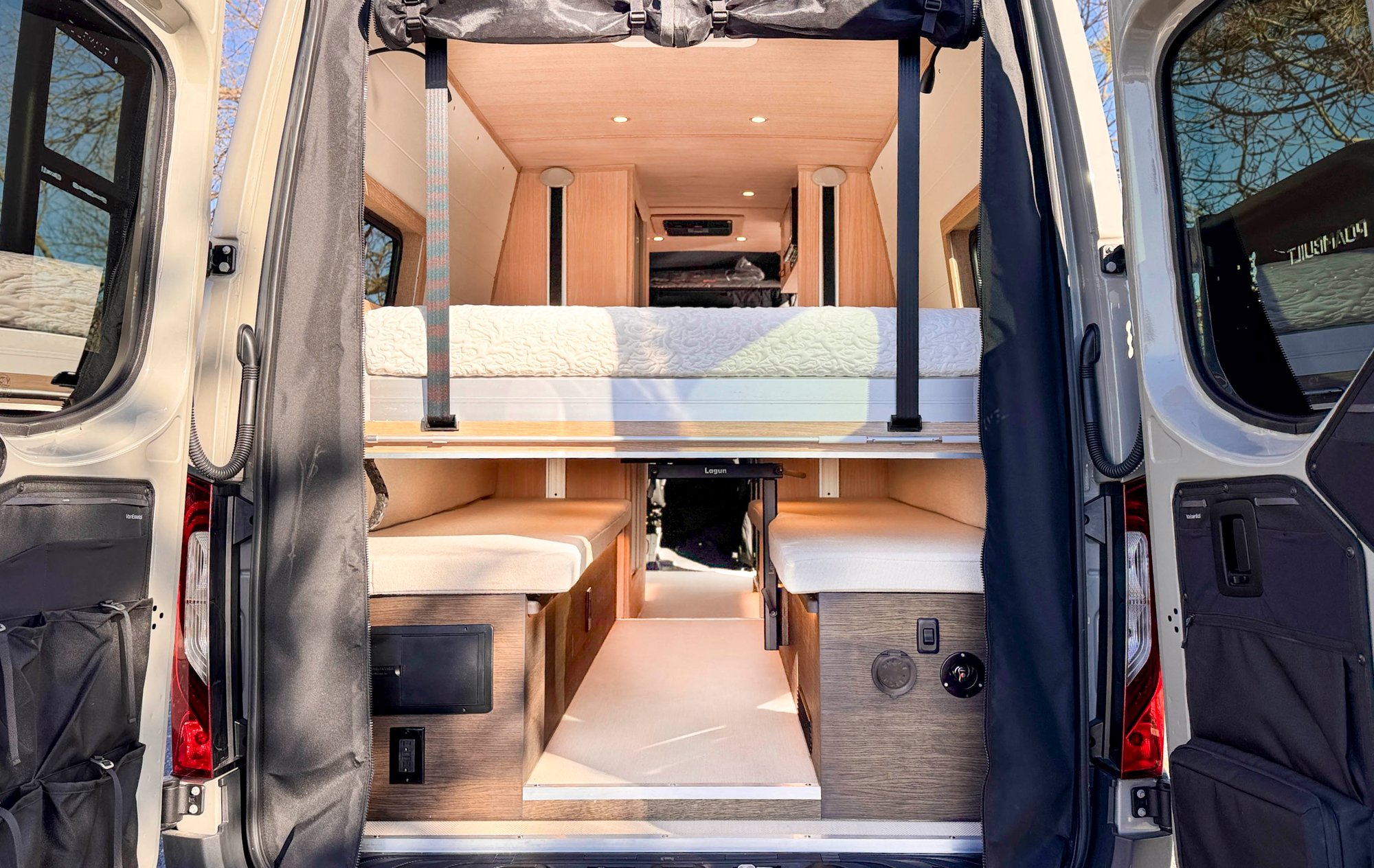
A north-south lift bed on the long wheelbase — full sleeping length, step out from either side.
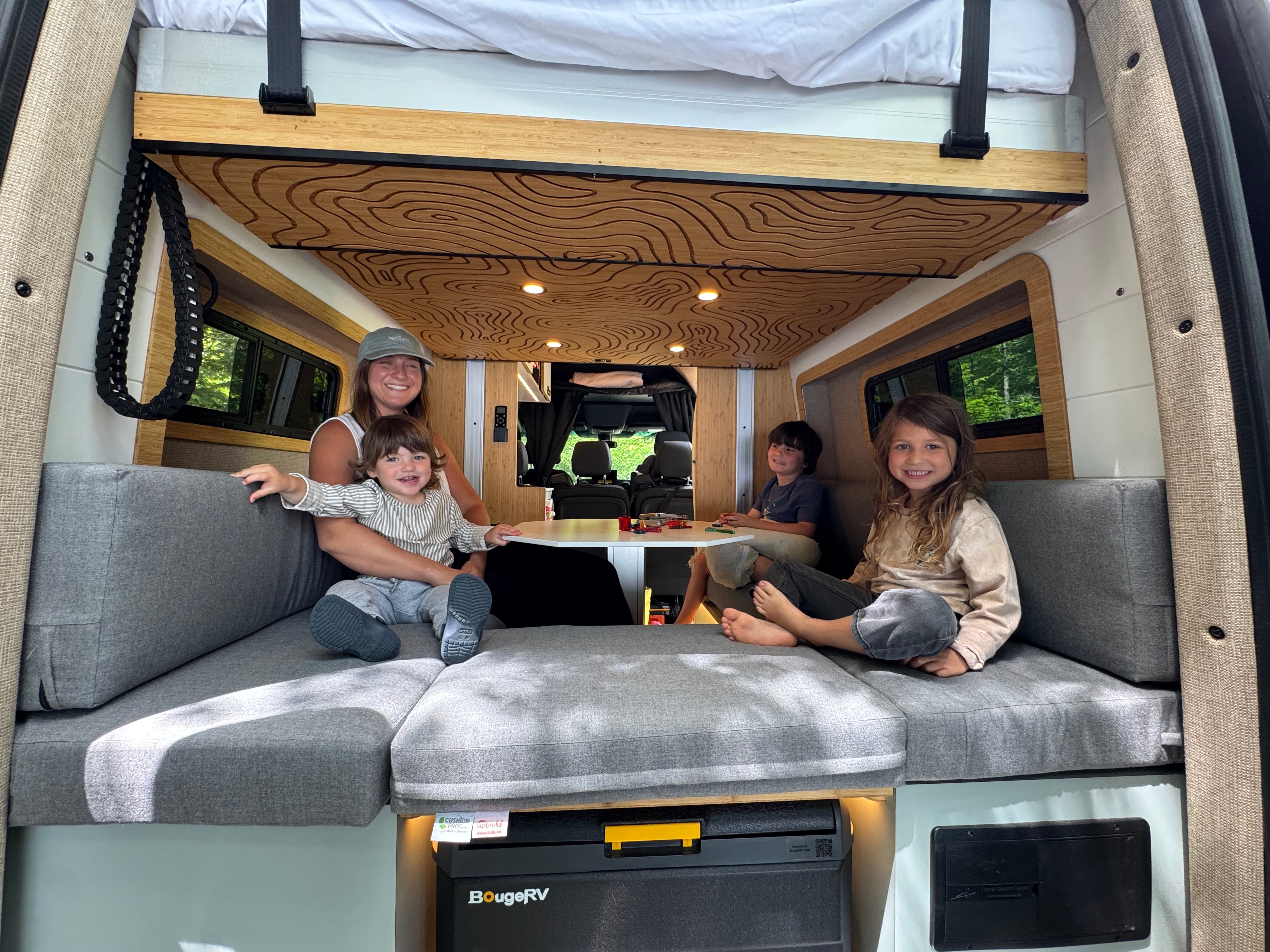
A 144 with an elevator bed over a U-shaped lounge and a pass-through pop-top berth right above it.
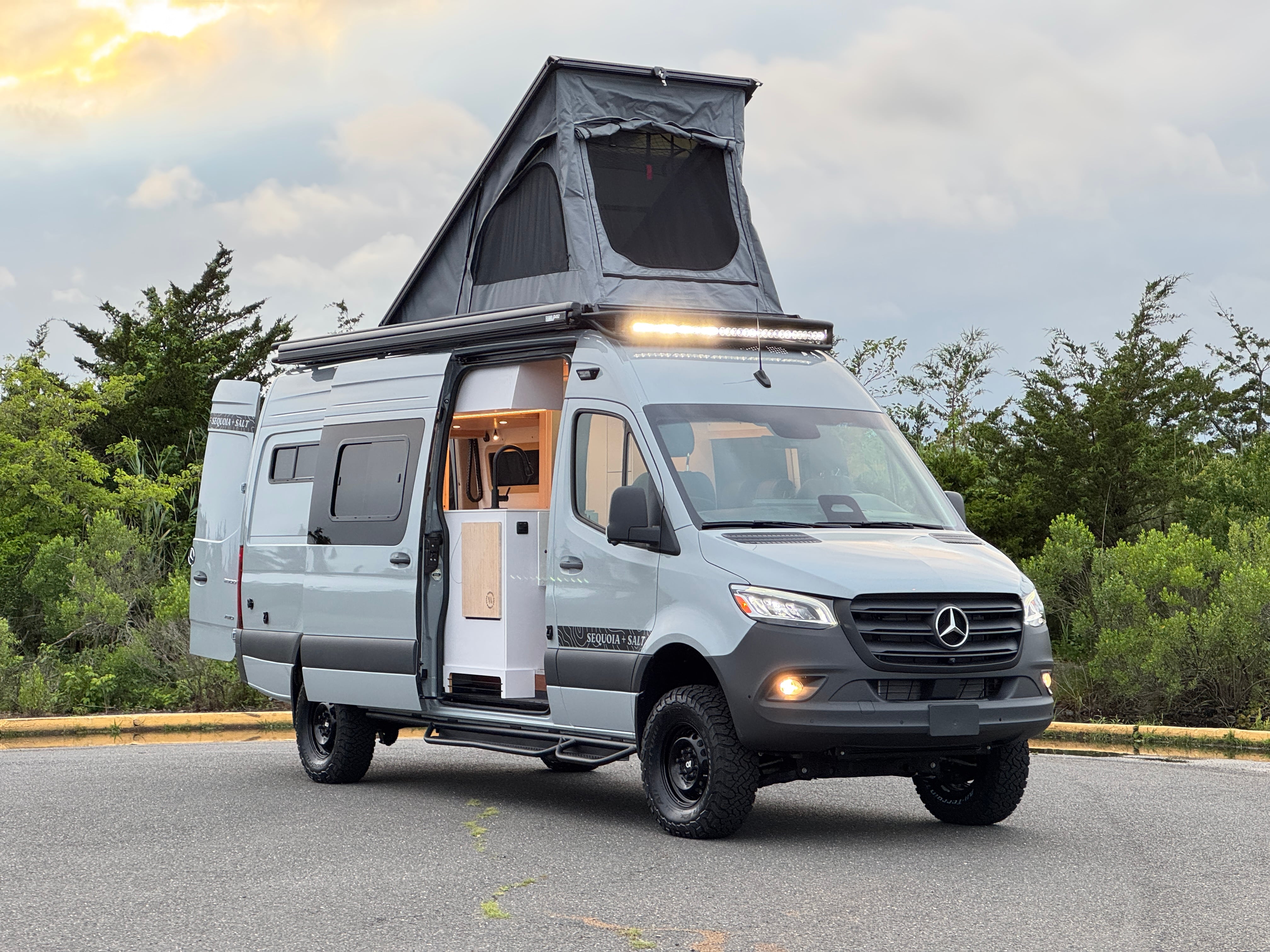
A 170 with an elevator bed over a convertible lounge — and the air conditioning mounted under the van to keep the roof clear.
Which Lift Bed Is Right?
Lift beds come in two orientations, and the right one is mostly a question of how tall you are and how much van you want to drive. Here is the honest split.
The bed runs across the van, wall to wall. That keeps the whole build shorter, so the van is easier to park on a city street and more maneuverable on a tight forest road. The tradeoff: sleeping width is set by the van's interior width, which suits most people but can feel short if you are tall and sleep stretched fully out.
Best for: solo travelers and couples who value a compact, nimble van and mostly stay a night or two per stop.
The bed runs the length of the van, so you get full sleeping length regardless of height, and you can step out from either side rather than climbing over your partner. It rides on the longer 170 wheelbase, which trades some parking ease and tight-road agility for that extra length and living room.
Best for: taller travelers, couples who both get up in the night, and anyone settling in somewhere for longer stretches.
Make It Yours
The lift-bed layout is the engineering — the bed, the actuators, the lounge beneath, and how they share the floor. That part does not change; it is what makes the van work. What is yours to pick is everything you see and touch: the color scheme, the laminates, the wall panels, the flooring, the countertops, and the upholstery. Love the layout but not the finish shown here? That is exactly the kind of change we make. It is not a configurator — it is a conversation.
Want a van drawn entirely from scratch instead? That is what Fully Custom is for. See Fully Custom builds →
Pricing
Every lift-bed build is spec'd to how you travel — chassis, power, climate, and finishes — so the price follows the build, not a sticker. Tell us what you're after and we respond within one business day to talk numbers.
What customers say
We let our customers do the talking. See real, verified reviews from owners of Sequoia + Salt builds and service work — directly on our Google Business Profile.
