Public Health · Civilian First Responder · Case Study
A matched pair of electric Ford Transits built to support Massachusetts's first civilian first responder program — Community Responders reaching people in crisis, in their own communities.
The Brief
In 2023, Northampton, Massachusetts became the first city in the state to stand up a civilian first responder team — the Division of Community Care (DCC), part of the city's Department of Health and Human Services. Born from Northampton's policing review in the wake of George Floyd's killing, the DCC dispatches unarmed, trauma-informed Community Responders in place of police for many calls involving homelessness, emotional distress, substance use, and basic-needs crises.
To do that work, Community Responders needed vehicles built for it. The DCC came to Sequoia + Salt in 2025 with a brief: a fleet of two electric Ford Transits, sized for different response scenarios and equipped as mobile workspaces for delivering care in the field. An electric drivetrain to match the program's mission — quiet, clean, and present in the neighborhoods it serves.
We delivered the matched pair in 2025. Built in the $150K–$200K range, each van was calibrated to its specific role within the DCC's response model.
The Fleet
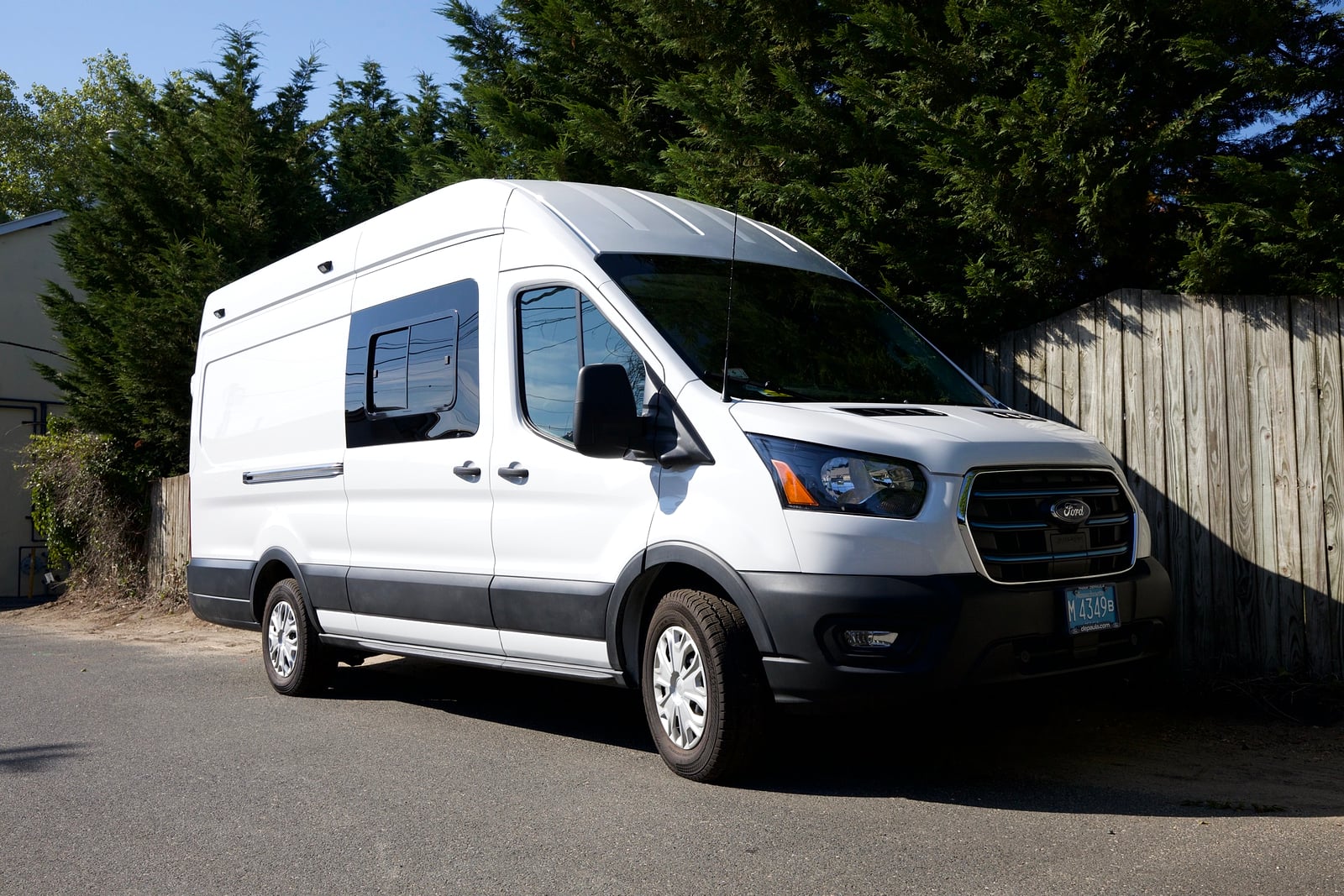
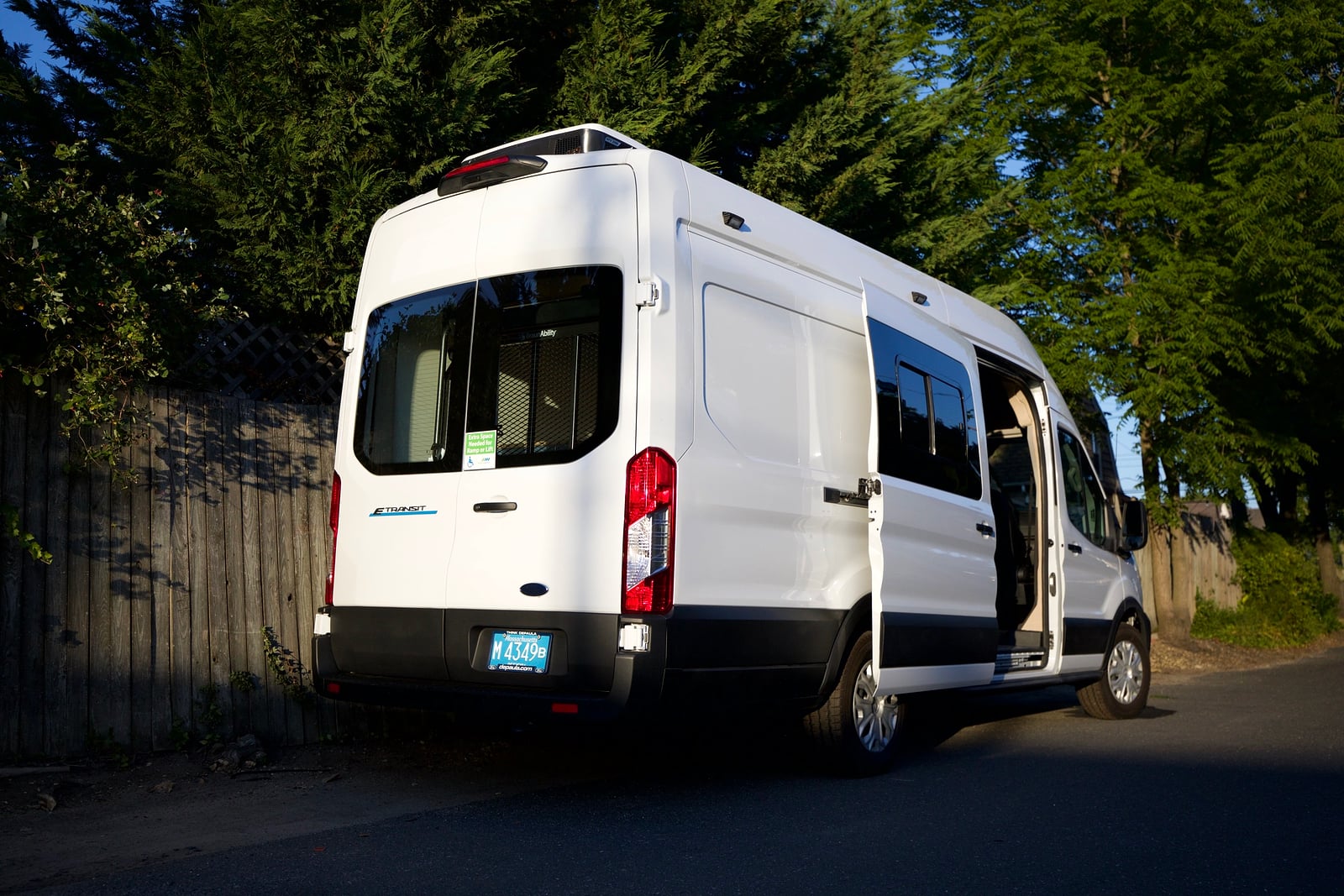
The DCC's work spans two distinct response profiles, so we built two distinct vans on the same electric platform. The Black Short — a Ford Transit 148 Electric RWD — is the nimble one: sized for quick, low-profile urban response and easy maneuvering on residential streets. The White Ext — a Transit 148 EXT Electric RWD — trades that nimbleness for room, carrying the extra interior volume an extended-duration mission demands.
Matched drivetrain, matched build language, two different footprints. A responder can take whichever van fits the call.
Interior Workspace
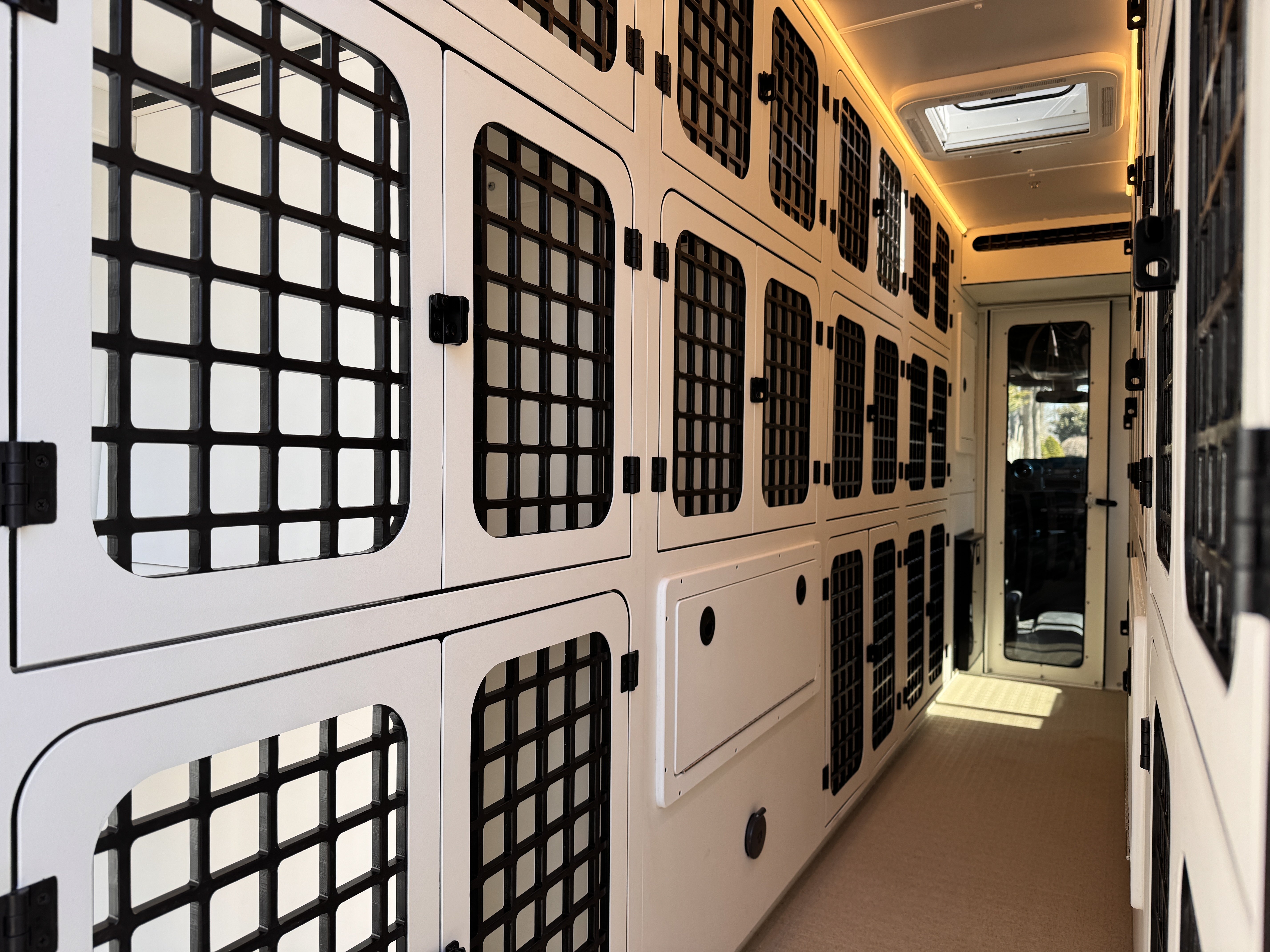
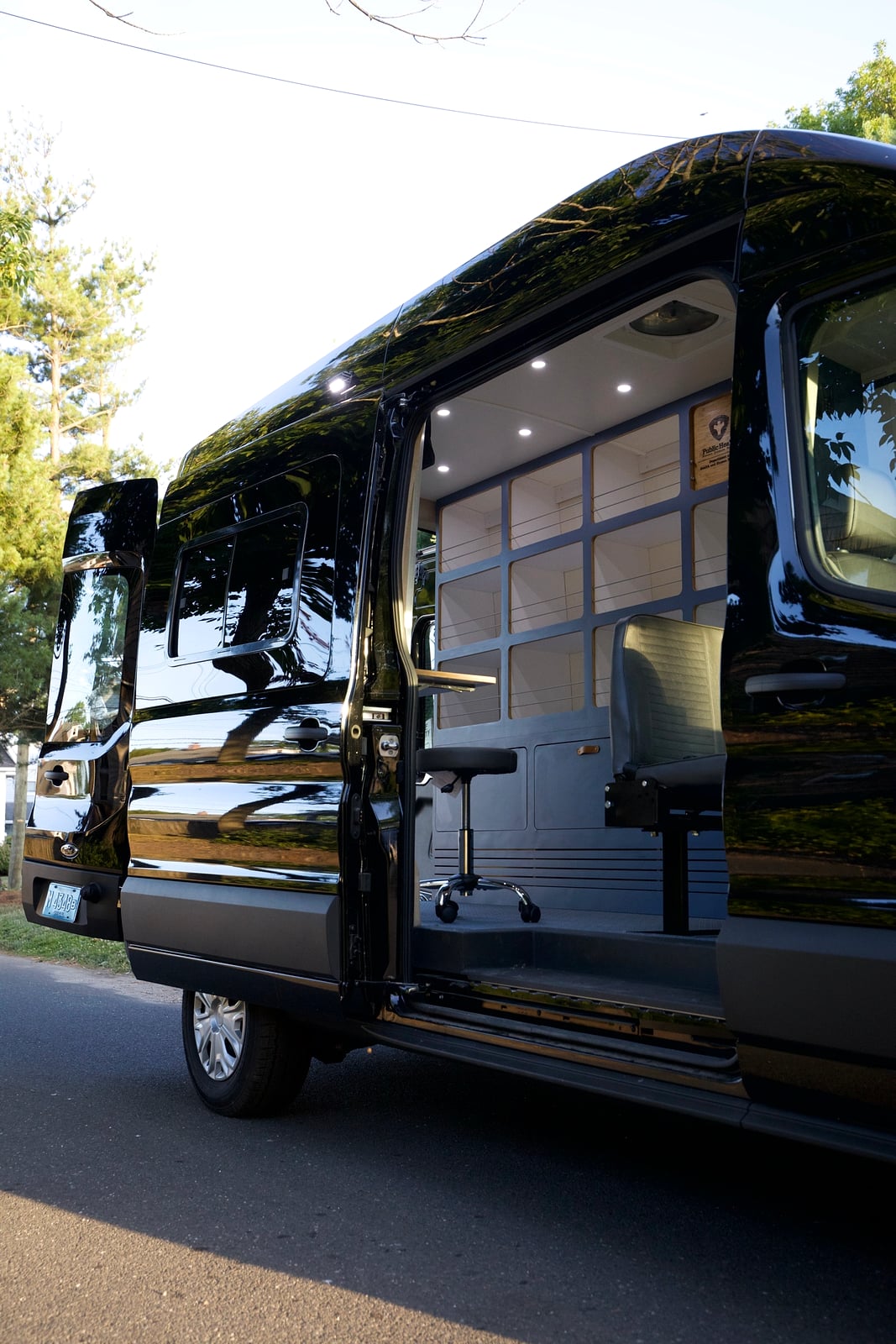
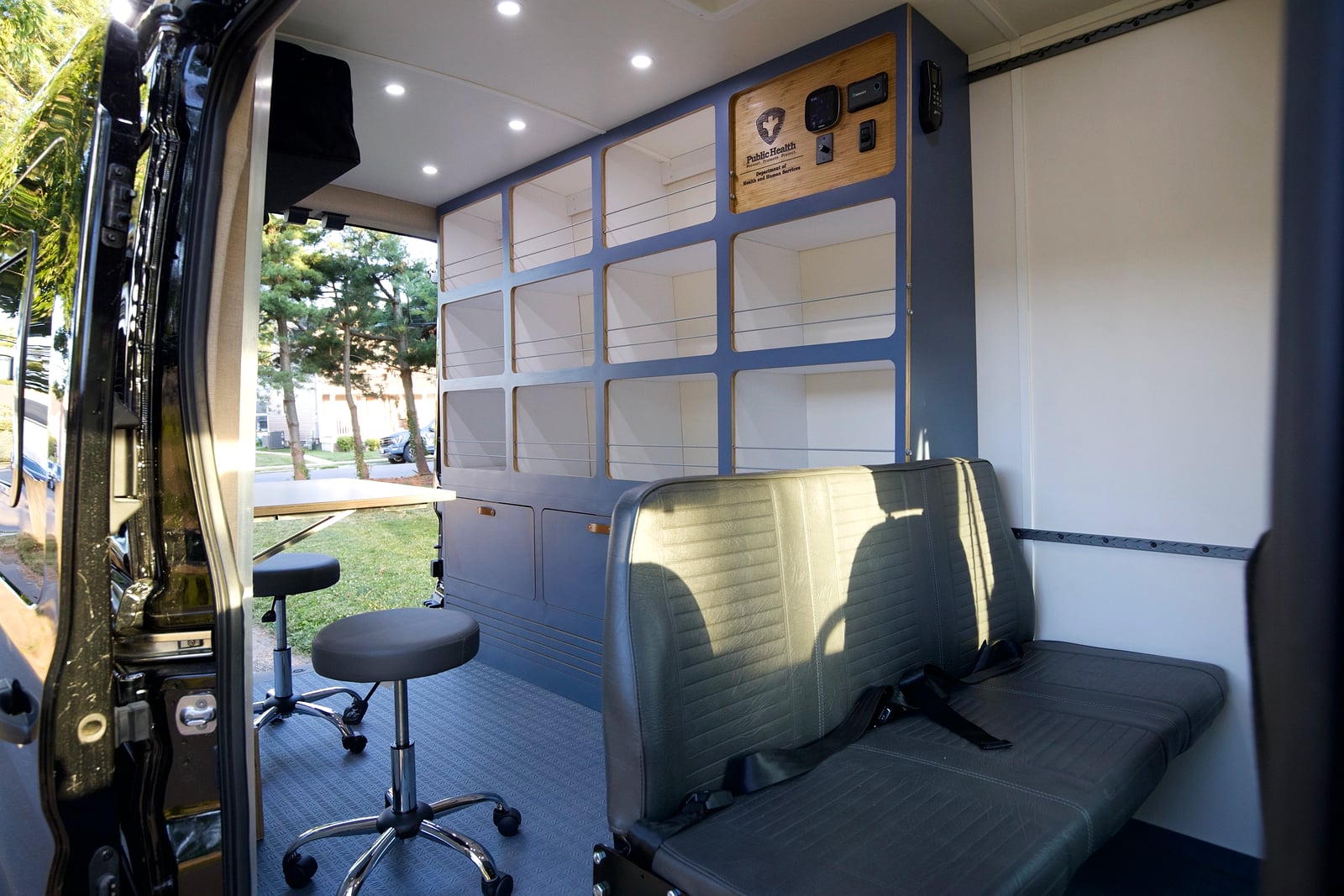
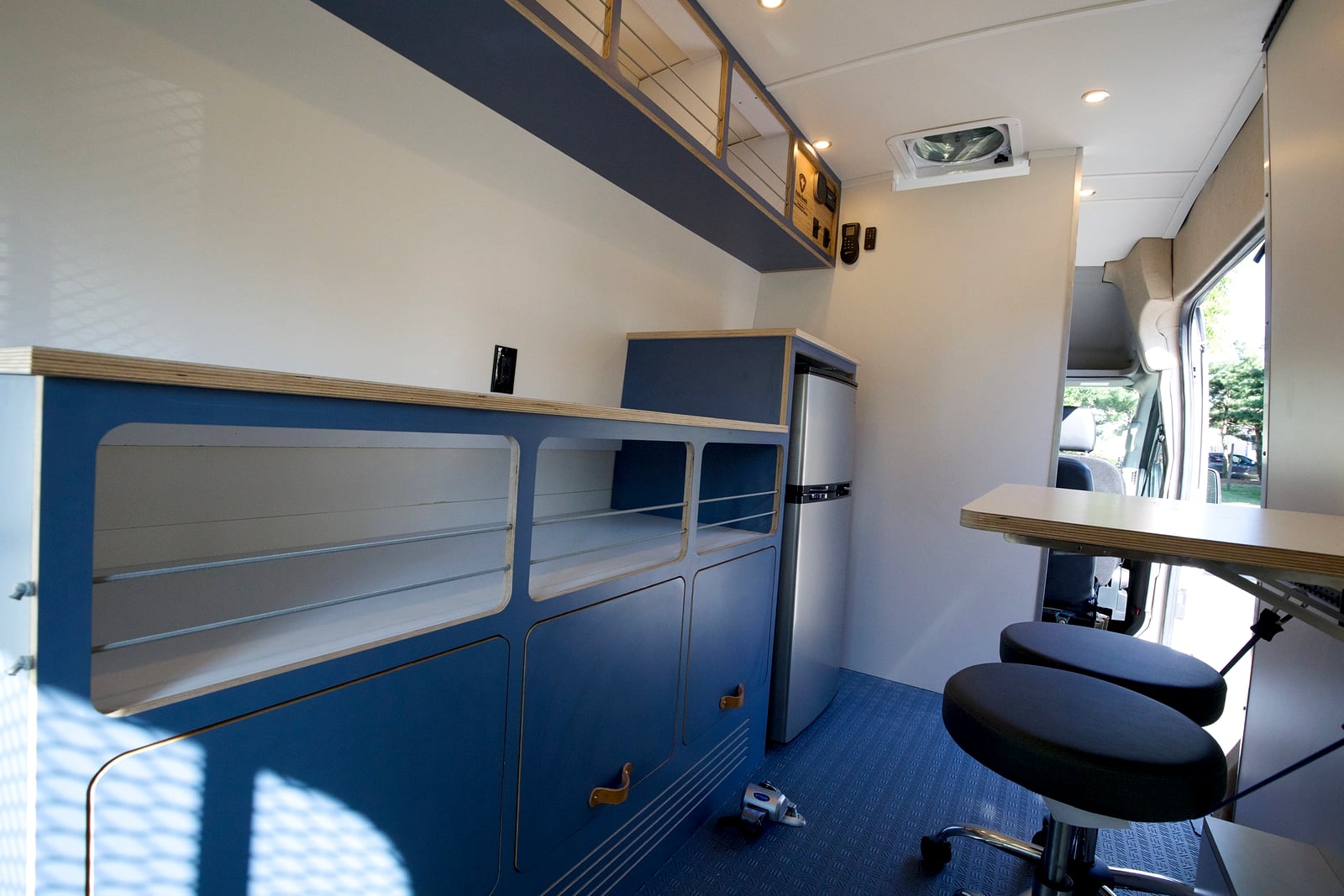
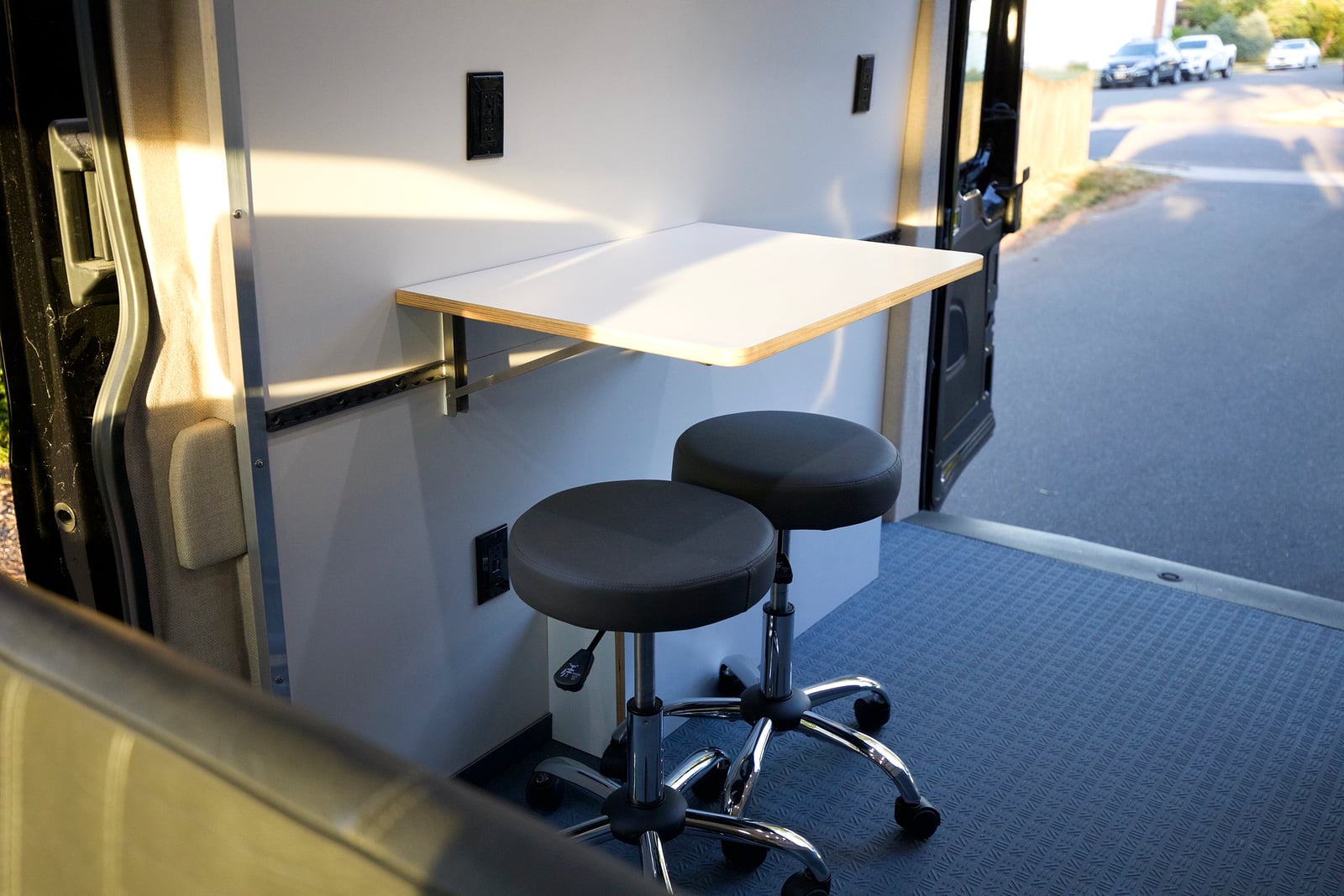
Inside, each van reads less like a vehicle and more like a small, steady room. A full-height modular storage wall of open cubbies keeps supplies and outreach materials sorted and in reach. Bench seating with seatbelts lets a responder sit with someone safely, and a fold-out work surface with rolling stools turns the cabin into a place to fill out a form, share a resource, or simply talk.
The extended White Ext adds a compact galley — a counter, storage, and a refrigerator — so a crew can carry water, food, and supplies through a long shift in the field without breaking to restock. Recessed lighting and a muted blue-and-birch palette keep the space quiet and unintimidating, which for trauma-informed work is part of the spec, not a finish detail.
Electric Drivetrain & Power Systems
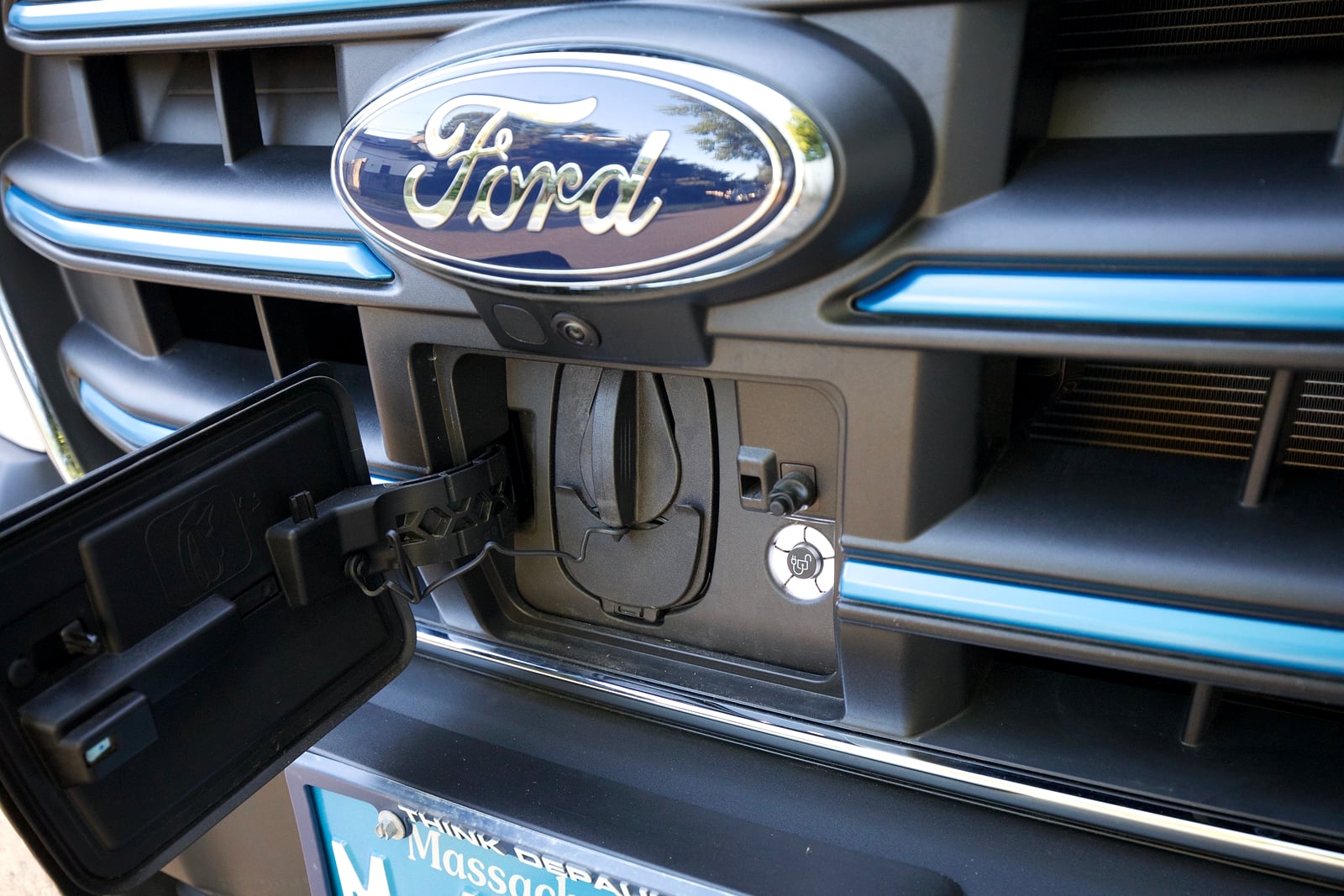
Both vans are built on the all-electric Ford E-Transit chassis. That choice is practical and it is symbolic: a public-health program that shows up in a neighborhood to help should not idle a diesel engine outside someone's window. Zero tailpipe emissions in the communities being served is the right answer for the mission, and the quiet drivetrain makes every arrival a little less of an event.
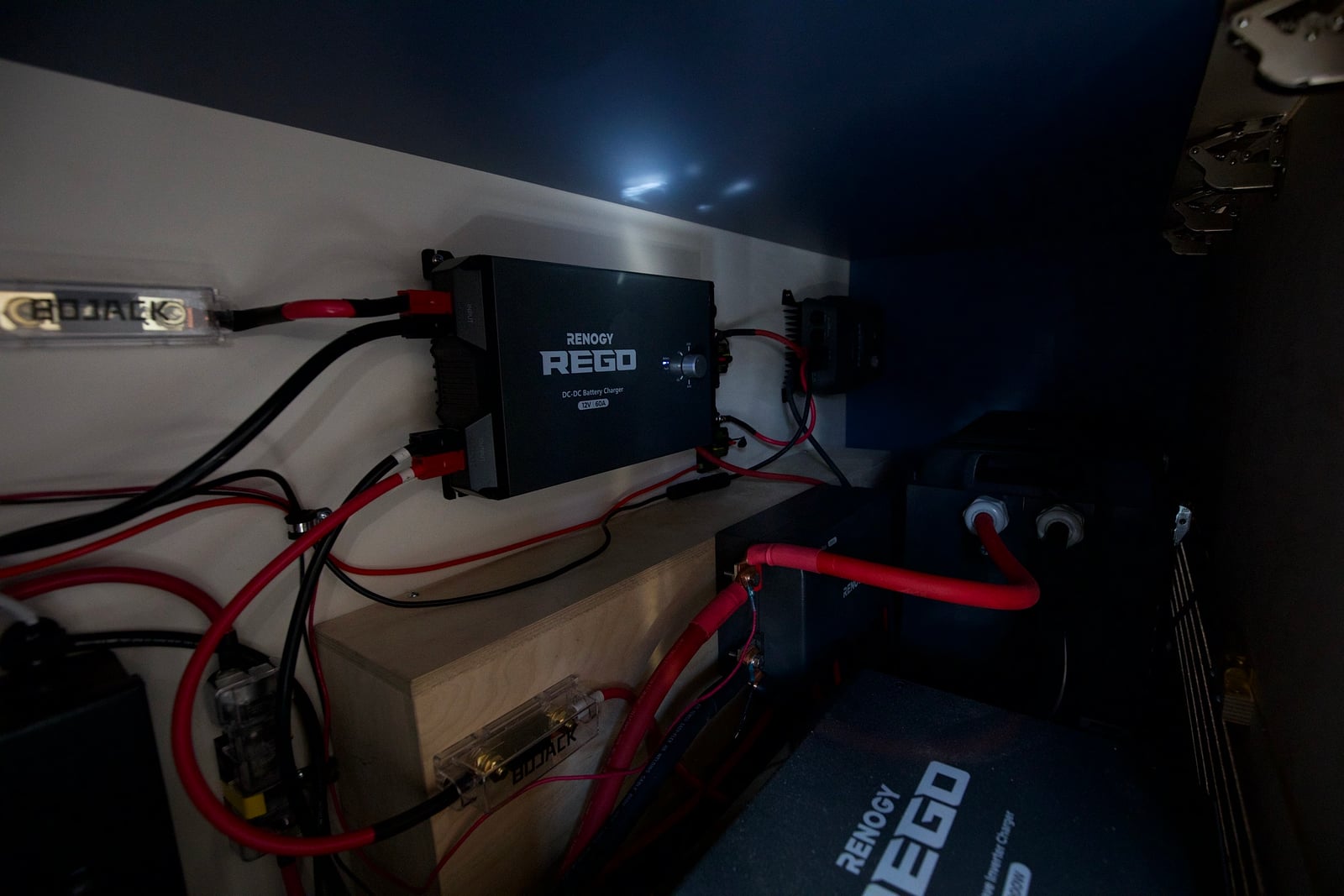
Behind the drivetrain sits a house power system — a battery bank, DC-DC charger, and inverter feeding the cabin's lighting, workstation, refrigeration, and devices — with live monitoring at the control panel. Industry-standard components throughout, so any qualified tech can service it down the road.
Storage & Mobile Workspace
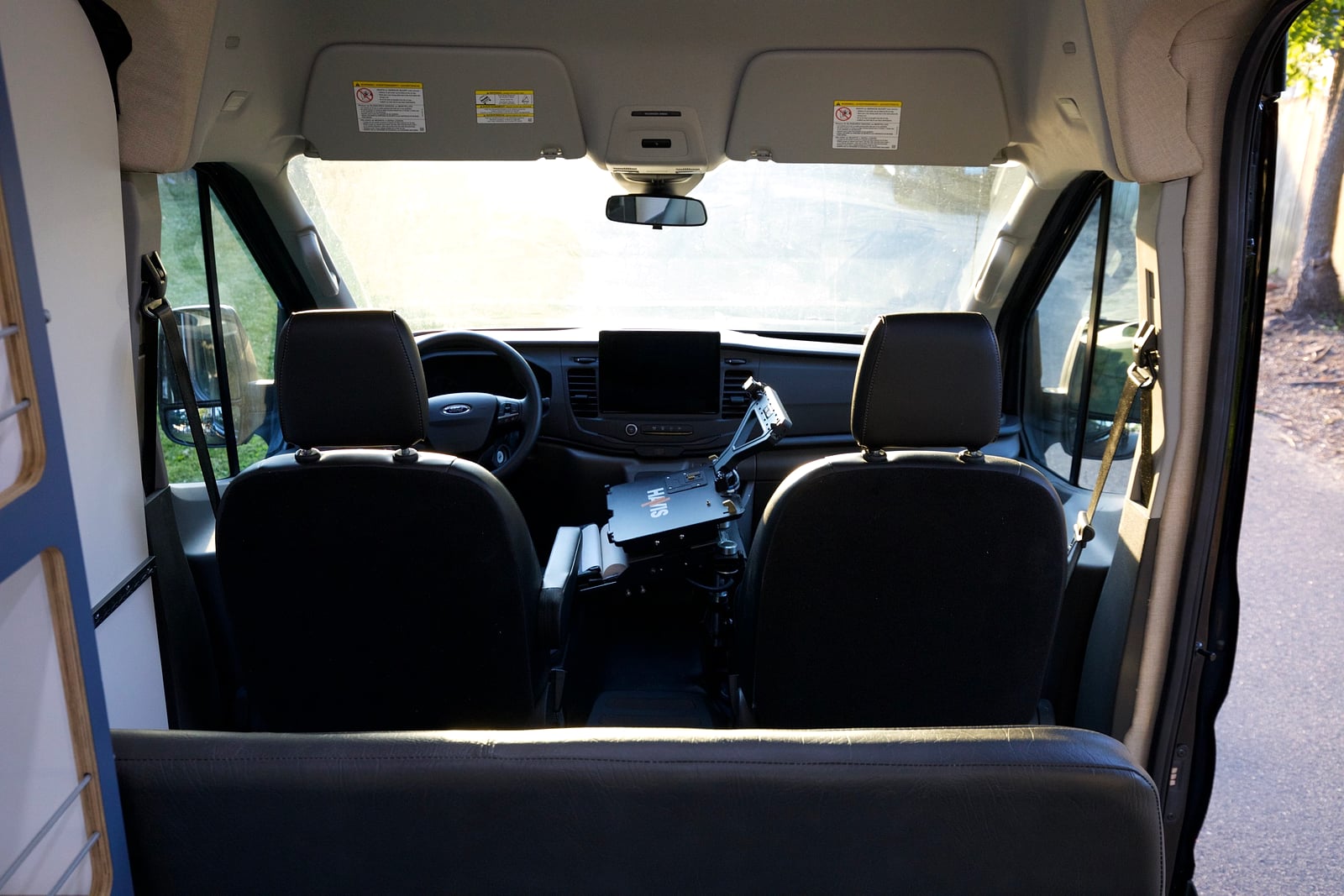
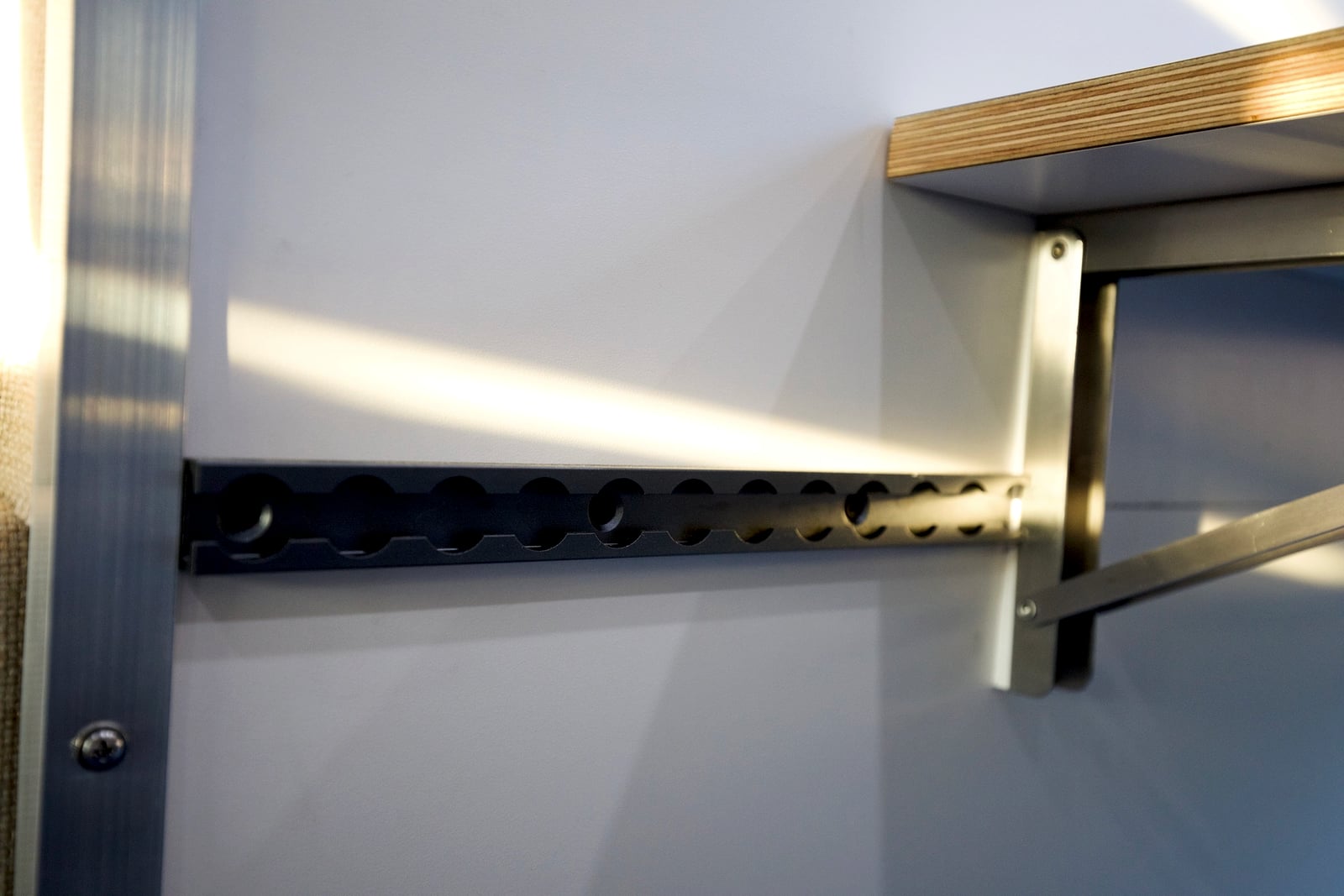
A field shift generates paperwork, supplies, and gear, and all of it has to travel safely and deploy fast. Wall-mounted fold-down work surfaces give responders a desk wherever they park; a modular slotted wall track lets the layout change as the program's needs do. Cabinetry, overhead storage, and the cab-mounted dock for a laptop and printer turn each van into a self-contained office that can write up a referral on the curb.
The Exterior
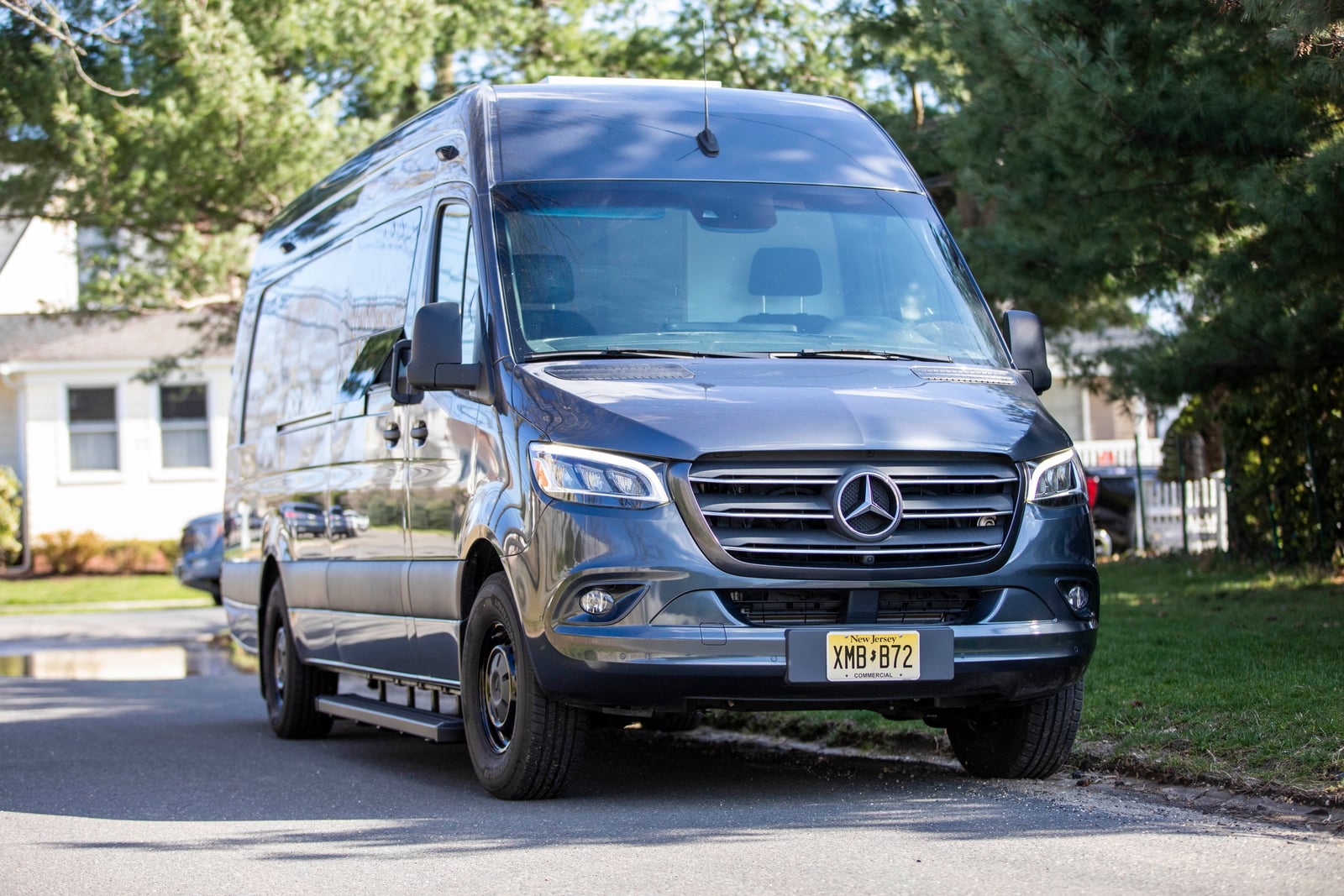
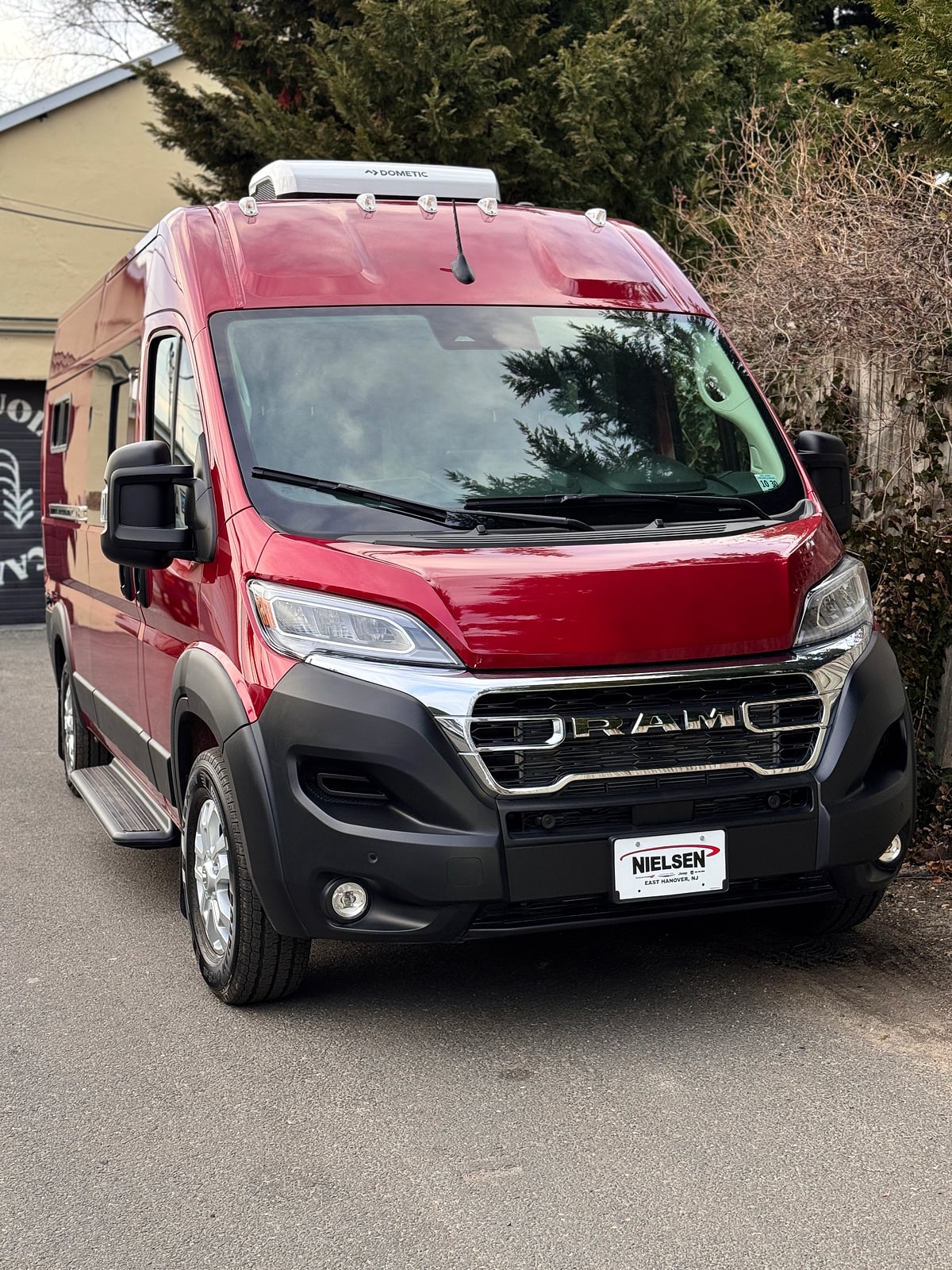
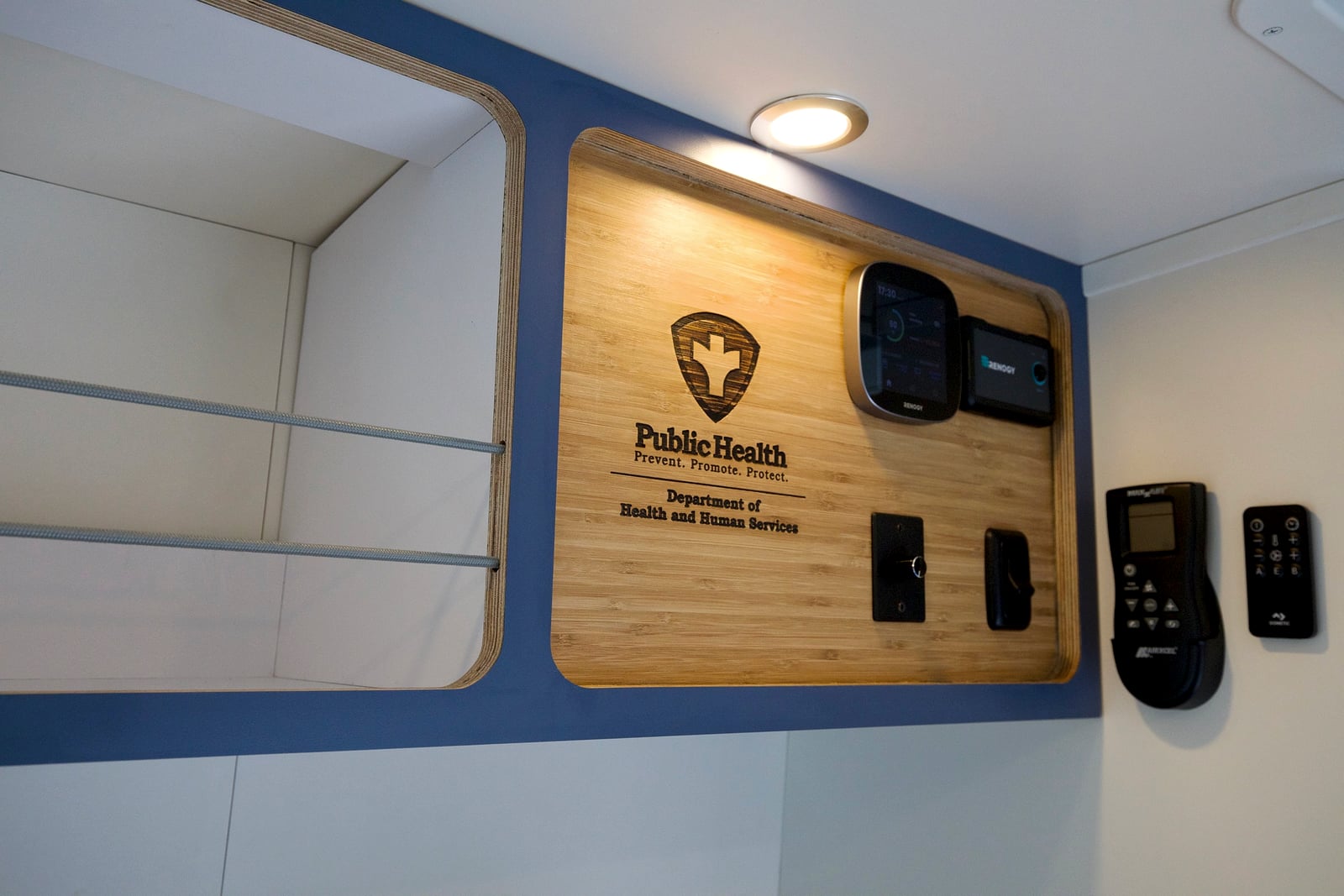
The vans were delivered as clean black and white E-Transits — the DCC applies its own program branding after delivery, so these build-delivery photos show the plain chassis. The build's identity is engraved where it matters most for the crew: a bamboo control panel inside each van carries the Northampton Department of Health and Human Services "Public Health — Prevent. Promote. Protect." mark alongside the power and system controls.
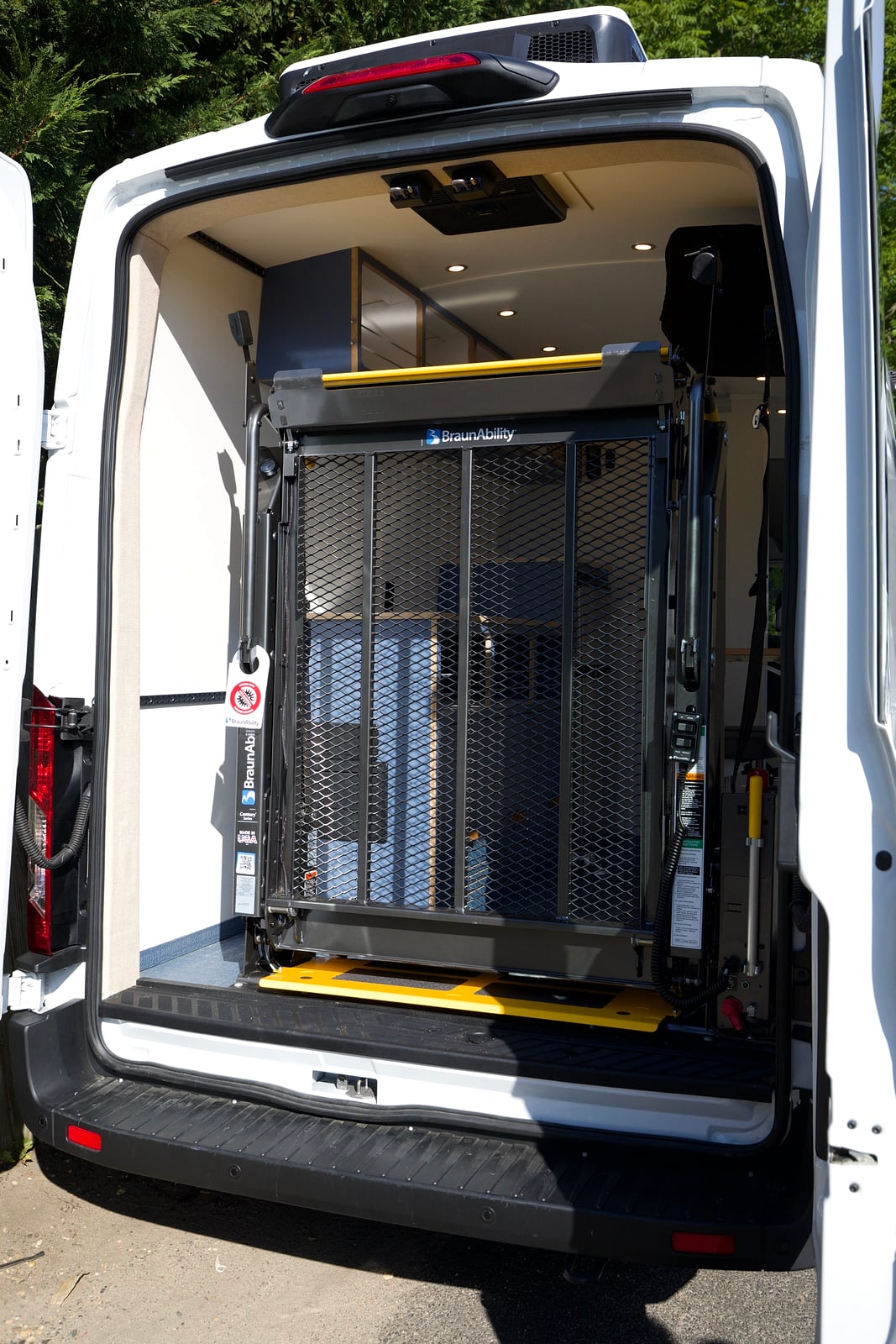
At the rear, a powered wheelchair lift makes the cabin accessible — so the van can meet a person where they are, regardless of mobility. It's a quiet piece of hardware that widens who the program can reach.
The Mission
Both vans now operate in Northampton, carrying Community Responders through the DCC's daily work. As of recent reporting, responders are available six days a week, Monday through Saturday, across extended hours — meeting people where they are with what the program calls "person-centered and trauma-informed support." Northampton's model, the first of its kind in Massachusetts, is being studied by other municipalities weighing how to answer the same kinds of calls.